How to Repair a Hole in an Inflatable Tent: A Quick Repair Guide
Time:2026-08-18
Pageviews:0
Inflatable tents are designed for outdoor use and built to withstand repeated inflation, transportation, setup, and takedown. However, even a durable PVC-coated tarpaulin inflatable tent can occasionally develop a small puncture, tear, or damaged seam due to sharp objects, improper handling, abrasion, or long-term use.
The good news is that most small holes in PVC inflatable tents can be repaired quickly when the damage is identified early and the correct repair method is used.
This guide explains how to find the leak, choose the right repair method, and restore your inflatable tent to reliable working condition.
1. First, Identify the Type of Damage
Before repairing your inflatable tent, determine what has actually been damaged.
Common problems include:
- Small punctures or pinholes
- Small cuts or tears
- Damaged PVC fabric
- Leaking seams
- Damaged valves or air inlets
- Larger tears caused by sharp objects
- Damage around high-stress connection points
The repair method depends on the size, location, and type of damage.
Small Puncture
A small puncture may only cause a slow loss of air. For continuous-inflation tents, it may be difficult to notice because the blower continuously replaces the lost air.
Small Cut or Tear
A visible cut should be repaired as soon as possible. Even a small cut can become larger when the tent is inflated repeatedly.
Seam Damage
If air is escaping from a seam, simply covering the surface may not provide a durable repair. The damaged seam may require professional reinforcement or heat welding.
Valve or Air-Inlet Damage
If the leak is around the inflation valve or air inlet, inspect the connection and surrounding PVC material carefully. Valve-related problems may require replacement parts or professional repair.
2. How to Find a Small Leak
Small punctures can sometimes be difficult to locate, especially on large inflatable tents.
Method 1: Listen for Escaping Air
Inflate the tent and move close to the suspected area. A small leak may produce a faint hissing sound.
This method works best in a quiet environment.
Method 2: Use Soapy Water
For a small suspected leak, mix a small amount of mild dish soap with water and apply it to the area with a sponge or spray bottle.
If air is escaping, small bubbles will form around the damaged area.
Once you locate the leak, mark it with a removable marker or tape.
Important: Avoid soaking electrical components, blower connections, valves, or other areas where water could cause damage.
Method 3: Inspect the Tent Carefully
Look closely at:
- Corners
- Seams
- Attachment points
- Areas exposed to friction
- Areas that contact the ground
- Handles and connection points
- Inflation openings
- Areas that have been folded repeatedly
Finding the leak before applying a patch is the most important step in the repair process.
3. Quick Repair for a Small Hole
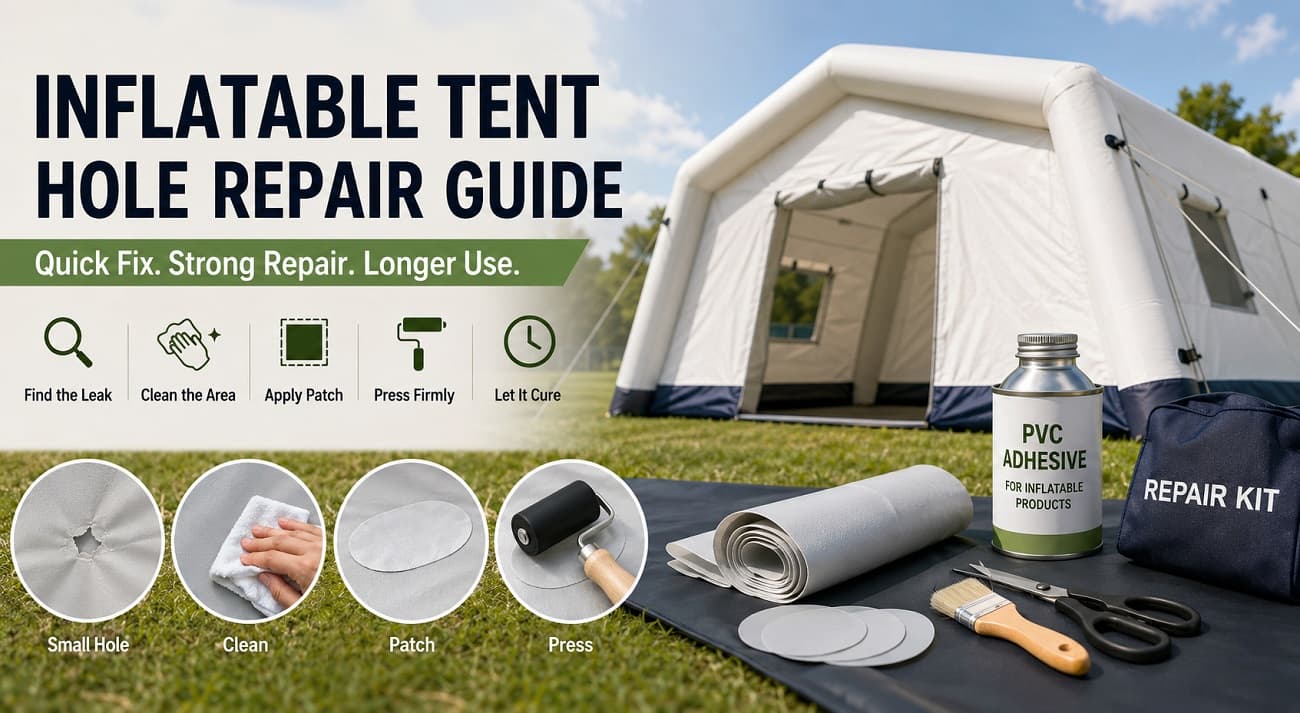
For a small puncture in PVC tarpaulin, a PVC repair patch is usually the simplest solution.
What You Need
Prepare:
- PVC repair material
- Suitable PVC adhesive, if using an adhesive patch
- Clean cloth
- Mild cleaning solution
- Scissors
- Roller or firm smooth tool
- Marker
The repair material should be compatible with the PVC-coated tarpaulin used on the inflatable tent.
4. Step-by-Step PVC Patch Repair
Step 1: Deflate the Tent
Turn off the blower and completely deflate the inflatable tent.
For a closed-air inflatable tent, release the air according to the manufacturer's instructions.
Repairing a fully deflated surface makes it easier to achieve good contact between the patch and the tent material.
Step 2: Clean the Damaged Area
Clean the area around the hole and remove dust, dirt, grease, moisture, and other contaminants.
Allow the surface to dry completely.
A clean and dry surface is essential for good adhesion.
Step 3: Prepare the Patch
Cut a piece of compatible PVC repair material large enough to cover the damaged area.
For a small hole, the patch should extend beyond the damaged area on all sides.
A rounded patch is generally preferable to a patch with sharp corners, because rounded edges are less likely to catch or peel during handling.
Step 4: Apply the Patch
Depending on the repair material and manufacturer instructions, apply the appropriate PVC adhesive and carefully position the patch over the hole.
Avoid trapping air bubbles underneath the patch.
Step 5: Press Firmly
Use a roller or smooth tool to press the patch firmly from the center toward the edges.
This helps remove air pockets and improves contact between the patch and PVC surface.
Step 6: Allow It to Cure
Do not immediately inflate the tent after applying an adhesive patch.
Allow the adhesive to cure according to the adhesive manufacturer's instructions.
Premature inflation can weaken the bond and cause the patch to lift.
5. What About Heat-Welded PVC Repairs?
For professional inflatable manufacturing and major repairs, heat welding can provide a stronger and more permanent connection than a simple adhesive patch.
Heat welding uses controlled heat and pressure to bond compatible PVC materials together.
It is particularly useful for:
- Larger tears
- Damaged seams
- Structural areas
- Repeatedly stressed areas
- Large commercial inflatable tents
However, heat welding requires the correct equipment, temperature, pressure, and technique.
Do not attempt to heat-weld an inflatable tent with an improvised heat source. Excessive heat can damage PVC tarpaulin and compromise the structure.
For significant damage, professional repair is recommended.
6. Continuous-Inflation vs. Airtight Inflatable Tents
Repair requirements can differ depending on the construction of the inflatable tent.
Continuous-Inflation Tents
Continuous-inflation tents use a blower to maintain internal air pressure.
A small puncture may not cause an immediate collapse because the blower continuously supplies air. However, the leak should still be repaired because excessive air loss can increase blower workload and affect the tent's performance.
For continuous-inflation inflatable tents, PVC tarpaulin around 0.55–0.6 mm is commonly used.
Airtight Inflatable Tents
Airtight or sealed inflatable tents are designed to retain air for extended periods.
Because the structure relies on airtight construction, even a relatively small leak can gradually reduce pressure.
For this type of product, thicker PVC tarpaulin around 0.9 mm is commonly used.
When repairing an airtight inflatable tent, pay particular attention to:
- Seams
- Valves
- Welded areas
- Connection points
- Larger cuts
7. How to Check the Repair
After the repair has fully cured, inflate the tent again.
Inspect the repaired area carefully.
For a suspected leak, apply a small amount of soapy water around the repaired area and check for new bubbles.
Also check whether:
- The patch edges remain firmly attached
- The repaired area stays flat
- No air is escaping around the patch
- The tent maintains normal pressure
- The surrounding PVC material shows no additional damage
For airtight tents, leave the tent inflated for a period of time and monitor whether the pressure drops abnormally.
8. When a Simple Patch Is NOT Enough
A small patch is suitable for minor punctures, but not every type of damage should be repaired this way.
Professional repair is recommended when you find:
- Large tears
- Long cuts
- Extensive seam separation
- Damage around structural connections
- Repeated leakage from the same location
- Major valve damage
- Damage to load-bearing areas
- PVC material that has become seriously aged or brittle
For commercial inflatable tents, a professional repair can help preserve the product's structural integrity and extend its service life.
9. How to Prevent Inflatable Tent Damage
Repairing a hole is useful, but preventing damage in the first place is even better.
Keep the Ground Clear
Before setting up your inflatable tent, remove:
- Stones
- Broken branches
- Glass
- Metal objects
- Sharp debris
- Other objects that could puncture PVC material
Use Proper Handling
Do not drag a heavy inflatable tent across rough concrete, asphalt, or other abrasive surfaces.
Use appropriate lifting and handling methods during transportation and installation.
Avoid Sharp Objects
Keep knives, tools, metal edges, and other sharp objects away from the tent.
Fold and Store Correctly
Before storage:
- Clean the tent.
- Make sure it is completely dry.
- Remove dirt and debris.
- Fold it according to the manufacturer's recommendations.
- Store it in a dry, protected environment.
- Avoid unnecessary compression or sharp folding.
Inspect Before Every Use
For rental businesses and frequent users, inspect the inflatable tent before every installation.
Early detection of a small puncture can prevent a minor repair from becoming a major problem.
10. Keep a Basic Inflatable Tent Repair Kit
For rental companies, event operators, camping businesses, and frequent users, it is useful to keep a small repair kit available.
A practical kit can include:
- Compatible PVC repair patches
- PVC adhesive
- Cleaning cloth
- Mild cleaning solution
- Scissors
- Marker
- Small roller or pressure tool
- Spare valves or compatible components when applicable
Having these supplies available can help you handle minor damage quickly instead of taking the entire inflatable tent out of service.
11. Professional Repair vs. DIY Repair
| Damage Type |
Recommended Repair |
| Tiny puncture |
PVC patch |
| Small hole |
PVC patch + compatible adhesive |
| Small cut |
Reinforced PVC patch |
| Small seam leak |
Professional inspection recommended |
| Large tear |
Professional repair |
| Damaged welded seam |
Heat-welded repair |
| Valve damage |
Valve replacement or professional repair |
| Structural connection damage |
Professional repair |
| Extensive material damage |
Professional assessment |
The key principle is simple:
Small surface damage can often be repaired quickly. Structural or extensive damage should be handled professionally.
12. Final Tips for Longer Inflatable Tent Life
A properly maintained inflatable tent can provide years of reliable service. Regular inspection and prompt repair are important parts of maintenance.
Remember these five rules:
Find the leak early.
Clean the surface thoroughly.
Use compatible PVC repair material.
Allow adhesive repairs to cure properly.
Seek professional help for major structural damage.
For commercial inflatable tents, proper material selection and manufacturing quality are equally important. At WINSUN, we manufacture inflatable tents using PVC-coated tarpaulin designed for outdoor applications, with different material constructions selected according to whether the product uses continuous inflation or airtight technology.
If you are looking for a reliable supplier for custom inflatable tents, commercial inflatable camping tents, airtight inflatable tents, or continuous-inflation PVC tents, professional manufacturing and repairability should both be considered when choosing your supplier.
FAQ: Inflatable Tent Repair
Can I repair a small hole in an inflatable tent myself?
Yes. Small punctures in PVC tarpaulin can often be repaired using a compatible PVC patch and adhesive, provided the surrounding material is still in good condition.
Can I use ordinary glue to repair an inflatable tent?
It is not recommended. Use an adhesive specifically compatible with the PVC material. Incompatible glue may provide a weak or temporary bond.
How do I know where my inflatable tent is leaking?
Listen for escaping air, visually inspect seams and high-stress areas, or use mild soapy water to identify bubbles around a small leak.
Can a large tear be patched?
Large tears usually require reinforcement or professional heat-welded repair rather than a simple patch.
How often should I inspect my inflatable tent?
Inspect it before each use, especially for commercial or rental applications where the tent is frequently transported and installed.
Can a repaired inflatable tent be used immediately?
For adhesive repairs, wait until the adhesive has fully cured according to the adhesive manufacturer's instructions before inflating and using the tent.
Conclusion
A small hole does not necessarily mean that your inflatable tent needs to be replaced. With the correct PVC repair materials and proper technique, many minor punctures can be repaired quickly and effectively.
The most important thing is to repair damage as soon as you find it. Early maintenance helps prevent small punctures and cuts from developing into larger problems and helps extend the service life of your inflatable tent.
About WINSUN Tents:
WINSUN Tents combines 19+ years of PVC manufacturing expertise with innovative inflatable engineering to deliver premium temporary structures for clients worldwide. From advertising tents to emergency shelters, we build solutions that outperform expectations.
Consultation Inquiries:
Email: info@winsuntent.com
Website: www.winsuntent.com