Inflatable Tent Safety Guide: Essential Tips for Safe Outdoor Use
Time:2026-07-28
Pageviews:0
Protect Your Investment, Your Guests, and Your Event with Proper Inflatable Tent Safety Practices
Inflatable tents have become a popular choice for outdoor events, camping, exhibitions, sports competitions, emergency response, and commercial activities. Compared with traditional frame tents, inflatable tents are quicker to install, easier to transport, and offer excellent structural stability.
However, like any outdoor structure, safe installation and proper use are essential. Weather conditions, ground conditions, anchoring methods, and routine inspections all play an important role in ensuring a safe and successful event.
As a professional manufacturer of commercial-grade PVC inflatable tents, WINSUN has supplied inflatable tents to customers in more than 100 countries. Based on years of manufacturing and field experience, we've compiled the following practical safety guidelines.
Why Inflatable Tent Safety Matters
Although commercial inflatable tents are designed for strength and durability, they are still temporary structures exposed to changing outdoor environments.
Proper installation helps:
• Protect users and event staff
• Extend the service life of the tent
• Prevent unnecessary repairs
• Reduce the risk of accidents caused by strong winds or improper setup
• Keep your event running smoothly
A few minutes spent on safety checks can prevent costly problems later.
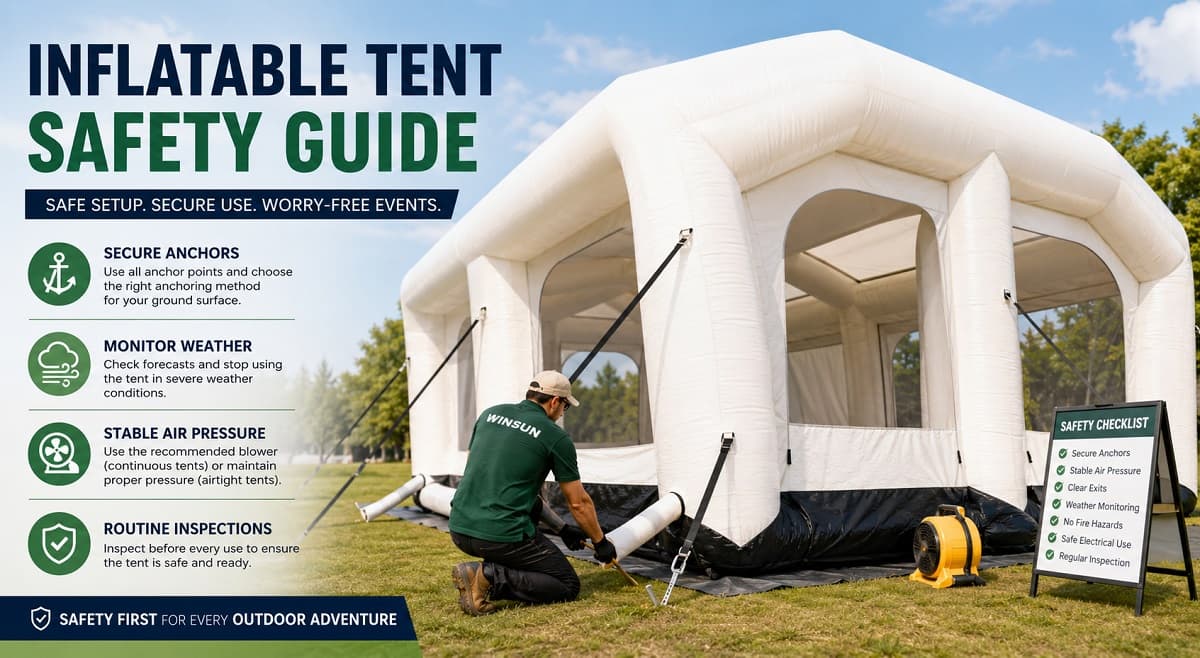
1. Choose the Right Installation Location
The installation site is the foundation of tent safety.
Before unpacking the tent, inspect the area carefully.
Ideal Ground Conditions
Choose a surface that is:
• Flat and level
• Free of sharp rocks or debris
• Well-drained
• Large enough for the tent and all anchor points
Suitable surfaces include:
• Grass
• Artificial turf
• Concrete
• Asphalt
• Compact gravel (with ground protection)
Avoid:
• Steep slopes
• Soft mud
• Flood-prone areas
• Loose sand without proper anchoring
• Areas with exposed roots or sharp objects
If necessary, place a ground tarp underneath the tent to reduce abrasion.
2. Always Secure the Tent Properly
One of the most important safety rules is never use an inflatable tent without proper anchoring.
Even on calm days, unexpected gusts of wind can move an unsecured tent.
Recommended Anchoring Methods
Depending on the installation surface:
Grass or Soil
• Heavy-duty ground stakes
• Reinforced anchor straps
• Multiple anchor points
Concrete or Asphalt
• Water ballast
• Sandbags
• Concrete weights
• Expansion bolt anchor systems (when permitted)
Always use all anchor points provided by the manufacturer.
Never skip anchor points simply because weather appears calm.
3. Monitor Weather Conditions
Weather is the biggest factor affecting outdoor tent safety.
Always check the weather forecast before and during the event.
Pay special attention to:
• Strong winds
• Thunderstorms
• Heavy rain
• Hail
• Snow
• Lightning
If severe weather is expected:
• Stop using the tent
• Evacuate occupants
• Deflate or dismantle the structure if necessary
• Store the tent safely until conditions improve
Commercial inflatable tents are designed for outdoor use, but no temporary structure should remain in dangerous weather conditions.
4. Keep the Air Pressure Stable
Different inflatable tent designs require different maintenance.
Continuous Inflation Tents
These tents use a blower that runs continuously.
Safety Tips:
• Use only the recommended blower.
• Ensure continuous power supply.
• Keep the air inlet unobstructed.
• Protect electrical cables from water.
• Do not disconnect the blower while the tent is occupied.
Airtight Inflatable Tents
These tents remain inflated without continuous airflow after inflation.
Safety Tips:
• Inflate to the recommended pressure.
• Do not overinflate.
• Check internal pressure during hot weather.
• Add air if pressure decreases after temperature changes.
• Release a small amount of air if internal pressure becomes excessive due to high temperatures.
Proper pressure helps maintain the tent's structural stability.
5. Keep Entrance and Emergency Exits Clear
Never block:
• Main entrances
• Emergency exits
• Ventilation openings
Maintain clear pathways both inside and outside the tent.
For public events, emergency exits should remain visible and easily accessible at all times.
6. Avoid Fire and High Heat Sources
Commercial PVC fabrics are often flame-retardant, but they are not fireproof.
Never place near:
• Open flames
• Fire pits
• Barbecues
• Fireworks
• Portable heaters without proper clearance
• Welding equipment
Keep all heat-producing equipment at a safe distance.
Smoking inside inflatable tents should also be prohibited.
7. Use Electrical Equipment Safely
If lighting, air conditioning, or audiovisual equipment is installed:
• Use certified electrical equipment.
• Keep cables organized.
• Protect plugs from rain.
• Avoid overloaded extension cords.
• Use outdoor-rated power supplies.
• Inspect cables before each event.
Electrical safety is especially important during rainy conditions.
8. Prevent Damage from Sharp Objects
PVC fabric is highly durable but can still be punctured by sharp items.
Keep away:
• Knives
• Scissors
• Metal tools
• Sharp furniture edges
• Glass
• Nails
When moving equipment inside the tent, avoid dragging heavy objects across the floor.
9. Do Not Exceed the Intended Capacity
Every inflatable tent is designed for specific applications.
Avoid:
• Hanging excessive weight from the roof
• Suspending heavy lighting without structural approval
• Overcrowding the interior
• Storing heavy equipment against inflatable air beams
If additional equipment must be suspended, consult the manufacturer for load recommendations.
10. Perform Routine Safety Inspections
Before every event, perform a quick inspection.
Check the Following:
✓ Anchor points secure
✓ Air pressure stable
✓ Blower operating normally (continuous inflation tents)
✓ No visible air leaks
✓ Zippers functioning properly
✓ Valves closed securely
✓ Guy ropes tight
✓ Fabric free from tears
✓ Power cables undamaged
A five-minute inspection can prevent major problems during the event.
11. Clean and Dry Before Storage
After outdoor use:
• Remove dirt and mud.
• Wash with mild soap and clean water.
• Allow the tent to dry completely.
• Fold carefully.
• Store in a cool, dry place away from direct sunlight.
• Protect from rodents and sharp objects during storage.
Proper storage greatly extends the lifespan of commercial PVC inflatable tents.
12. Train Your Installation Team
If the tent will be used regularly for rental businesses or commercial events, every operator should understand:
• Correct installation procedures
• Safe inflation pressure
• Anchoring requirements
• Weather response procedures
• Emergency evacuation plans
• Routine maintenance
Proper training is one of the most effective ways to reduce operational risks.
Common Outdoor Safety Mistakes
Avoid these common errors:
• Installing on uneven ground
• Using too few anchors
• Ignoring weather forecasts
• Leaving the tent unattended during strong winds
• Disconnecting the blower on continuous inflation tents
• Overinflating airtight tents in hot weather
• Packing the tent while still wet
• Skipping routine inspections
Most inflatable tent incidents can be prevented by following basic safety procedures.
Why Commercial PVC Inflatable Tents Offer Greater Safety
At WINSUN, our inflatable tents are engineered specifically for commercial applications where reliability is essential.
Continuous Inflation Models
• Heavy-duty 0.55–0.60 mm commercial PVC vinyl
• Constant airflow for stable structural support
• Ideal for exhibitions, sports events, promotional activities, and temporary shelters
Airtight Models
• Durable 0.90 mm commercial PVC vinyl
• Heat-welded airtight construction
• No continuous blower required after inflation
• Excellent for camping, glamping, emergency response, and long-term outdoor use
Both designs feature:
• Reinforced anchor points
• High-frequency welded seams (airtight models)
• Reinforced stitched construction (continuous inflation models)
• UV-resistant commercial PVC fabric
• Waterproof construction
• Flame-retardant materials (available to applicable standards)
• Designed for repeated commercial use
Final Thoughts
Inflatable tents are among the most efficient and versatile temporary structures available today. When installed correctly and used responsibly, they provide a safe, reliable solution for a wide range of outdoor applications.
Whether you're organizing a sporting event, operating a rental business, hosting an exhibition, or planning a camping adventure, following these safety guidelines will help protect both your investment and everyone using the tent.
At WINSUN, we don't just manufacture inflatable tents—we help our customers use them safely and confidently. Every commercial inflatable tent we produce is designed with durability, stability, and long-term outdoor performance in mind, ensuring dependable operation in demanding environments.
Frequently Asked Questions
Can inflatable tents be used in windy conditions?
Yes, commercial inflatable tents can be used in moderate wind when properly anchored. However, they should not remain in service during severe weather or high winds that exceed the manufacturer's recommended limits.
Do airtight inflatable tents need continuous electricity?
No. Airtight tents are inflated once and maintain their shape without continuous airflow. Periodic pressure checks are recommended, especially when temperatures change.
Should continuous inflation tents always keep the blower running?
Yes. Continuous inflation tents rely on constant airflow to maintain their structural integrity. The blower should remain connected and operating throughout use.
How often should an inflatable tent be inspected?
A quick safety inspection should be completed before every installation, with a more thorough inspection performed regularly based on usage frequency.
What's the biggest safety mistake users make?
Improper anchoring is one of the most common causes of inflatable tent accidents. Always use every designated anchor point and suitable anchoring equipment for the installation surface.
About WINSUN Tents:
WINSUN Tents combines 19+ years of PVC manufacturing expertise with innovative inflatable engineering to deliver premium temporary structures for clients worldwide. From advertising tents to emergency shelters, we build solutions that outperform expectations.
Consultation Inquiries:
Email: Info@winsuntent.com
Website: www.winsuntent.com