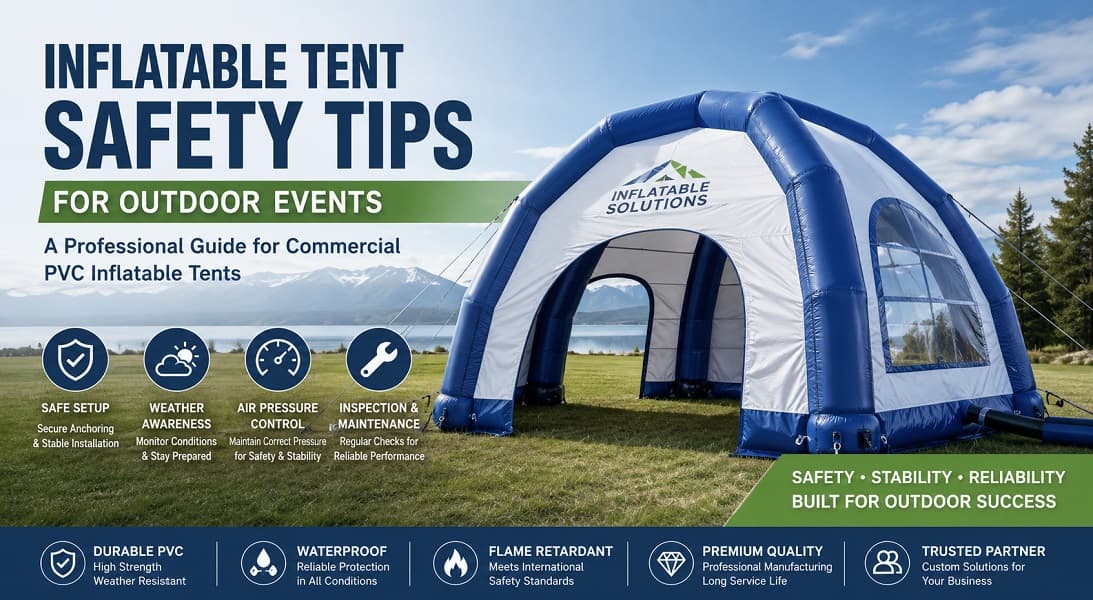
A Professional Guide for Commercial PVC Inflatable Tents
Inflatable tents have become one of the most practical and eye-catching structures for outdoor events, exhibitions, emergency response, camping, sports activities, and commercial promotions. Compared with traditional frame tents, inflatable tents offer faster setup, lightweight transportation, excellent branding possibilities, and modern visual appeal.
However, like any outdoor structure, proper installation and safe operation are essential to ensure stability, durability, and user safety—especially in changing outdoor environments.
As a professional manufacturer and supplier of commercial inflatable tents made from high-strength PVC tarpaulin materials, we would like to share some important inflatable tent safety guidelines for outdoor use.
Why Safety Matters for Inflatable Tents Outdoor environments can be unpredictable. Wind, rain, sunlight, uneven ground, and improper installation may affect the performance of inflatable structures. Commercial-grade inflatable tents are designed to withstand demanding conditions, but following correct safety procedures helps maximize: • Structural stability • User safety • Product lifespan • Weather resistance • Event reliability
Whether you are using a continuous-air inflatable tent or a sealed airtight tent, professional setup and regular inspection are extremely important.
1. Choose the Right Installation Surface Before setup, carefully inspect the ground conditions.
Avoid • Sharp stones or debris • Uneven ground • Areas with standing water • Slippery slopes
Sharp objects can damage the PVC fabric or reduce airtight performance. Always clear the installation area before unfolding the tent.
2. Secure the Tent Properly Proper anchoring is one of the most important safety steps.
Commercial inflatable tents should always be fixed using: • Heavy-duty ground stakes • Sandbags or ballast weights • Reinforced anchor ropes • D-rings or anchor points
Important Tip Even in light wind conditions, never operate a large inflatable tent without anchoring.
For hard surfaces such as concrete, use weighted ballast systems instead of stakes.
3. Monitor Weather Conditions Inflatable tents are designed for outdoor environments, but severe weather should always be taken seriously.
Pay Attention To • Strong winds • Thunderstorms • Heavy rain • Snow accumulation • Extreme heat
If wind speeds exceed the tent’s recommended safety rating, temporarily stop operation and deflate the structure if necessary.
Professional PVC inflatable tents generally offer excellent wind resistance due to their flexible air structure, but weather monitoring remains essential during outdoor events.
4. Maintain Correct Air Pressure For continuous-air inflatable tents: • Keep the blower running during use • Ensure stable power supply • Use backup generators for large events • Regularly check air tubes and inflation valves
For airtight inflatable tents: • Verify pressure before use • Check for slow leaks • Avoid overinflation during hot weather
Temperature changes can affect internal air pressure. In direct sunlight, air expansion may increase pressure inside sealed tents.
5. Use Commercial-Grade PVC Materials Material quality directly affects safety performance.
Professional inflatable tents are commonly made from: • PVC vinyl tarpaulin • Reinforced mesh fabric • Waterproof and UV-resistant coatings • Flame-retardant materials
High-quality PVC tarpaulin provides: • Excellent tear resistance • Better airtight performance • Strong weather resistance • Long service life • Easier maintenance and repair
Low-quality materials may crack, deform, or lose air under outdoor conditions.
6. Avoid Overloading the Tent Structure Inflatable tents are designed as temporary shelter structures—not load-bearing buildings.
Do not: • Hang excessive lighting equipment • Suspend heavy speakers without support • Climb on the air beams • Exceed recommended occupancy
If additional equipment is required for events, consult the manufacturer for approved hanging capacity and reinforcement solutions.
7. Ensure Safe Electrical Setup Continuous-air inflatable tents rely on electric blowers, making electrical safety extremely important.
Safety Recommendations • Use waterproof power connections • Keep cables away from walkways • Protect blowers from rain exposure • Use certified outdoor extension cords • Prepare backup power systems
Electrical systems should always comply with local event safety regulations.
8. Perform Regular Inspection and Maintenance Routine inspection helps prevent unexpected issues during events.
Check Before Every Use • Air leaks • Valve conditions • Stitching and welding areas • Anchor points • Blower operation • Surface damage
Cleaning Tips • Clean with mild soap and water • Avoid harsh chemical cleaners • Dry completely before storage
Proper maintenance significantly extends the lifespan of PVC inflatable tents.
9. Use Trained Personnel for Large Installations Large inflatable domes, event tents, and exhibition structures should be installed by experienced staff.
Professional setup teams help ensure: • Correct anchoring • Balanced inflation • Safe electrical connections • Fast emergency response
For commercial events, proper training improves both efficiency and safety.
10. Understand the Difference Between Airtight and Continuous-Air Tents Different inflatable tent structures have different operational requirements.
Continuous-Air Inflatable Tents • Require constant blower operation • Faster inflation • Excellent for large event structures
Airtight Inflatable Tents • No continuous power required after inflation • Lower noise level • Better mobility and energy efficiency
Understanding the structure type helps users operate the tent safely and efficiently.
Why Professional Manufacturing Matters A safe inflatable tent begins with professional manufacturing.
As an experienced inflatable tent supplier, we focus on: • Heavy-duty PVC tarpaulin materials • Reinforced welding technology • Commercial-grade air structures • Custom engineering solutions • Strict quality inspection • International safety standards
Final Thoughts Inflatable tents offer a modern, efficient, and visually impressive solution for outdoor events and commercial activities. With proper setup, weather awareness, routine maintenance, and professional-grade materials, inflatable tents can operate safely and reliably in a wide range of environments.
Choosing a trusted inflatable tent manufacturer is one of the most important factors in ensuring long-term safety and performance.
If you are looking for custom commercial inflatable tents made from durable PVC tarpaulin materials, our team can provide professional manufacturing solutions tailored to your project requirements.